


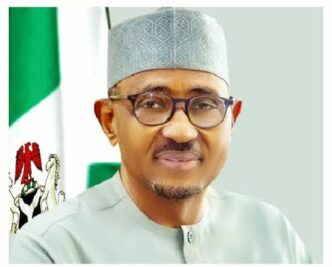
NIGERIA is on the cusp of a major energy breakthrough as clear regulations and stronger investor confidence emerge as the decisive factors that will unlock the country’s refining capacity, Chief Executive, Nigerian Midstream and Downstream Petroleum Regulatory Authority (NMDPRA), Engr. Farouk Ahmed, has said.
Speaking at a refining summit in Abuja, Ahmed said Nigeria is ‘rewriting its energy destiny’ with the emergence of the Dangote Refinery and a growing wave of modular and conventional refineries under development.
While he stressed that the country is moving away from decades of dependence on imported petroleum products toward becoming a net exporter, he was quick to warn that the transition hinges on maintaining transparent, predictable rules and a stable investment climate. 

According to him, the Petroleum Industry Act (PIA) 2021 and the policy direction of President Bola Ahmed Tinubu have created the most investor-friendly regulatory environment in Nigeria’s history, backed by 18 newly gazetted regulations co-designed with industry stakeholders to ensure bankability, fairness, and clarity.
Ahmed said the NMDPRA is not just enforcing rules but “facilitating industrial growth,” with reforms now guaranteeing crude supply to licensed refineries, enabling efficient evacuation of refined products, supporting naira-denominated crude sales, and accelerating permits under clear service-level timelines.
He noted that downstream liberalisation, modernised transportation codes, pricing frameworks developed with private operators, and new financing windows — including the Energy Bank and MDGIF — have positioned Nigeria as West Africa’s future hub for refined product trading.
But he cautioned that Nigeria must now ‘move from progress to performance,’ highlighting three urgent priorities: securing crude allocation for all licensed refineries, building shared evacuation and storage infrastructure, and operationalising dedicated energy financing mechanisms under the Authority’s 2025 Refining Acceleration Plan.

“With clarity, confidence, and collaboration, Nigeria will not only refine crude, but we will refine our economic destiny,” he said.
In a related development, Authority Chief Executive (ACE) also said Nigeria must adopt energy transition strategies rooted in realism, resilience, and national interest as global geopolitical shifts continue to reshape the global energy landscape.
Engr Ahmed stated this at the opening of the 18th NAEE/IAEE Annual International Conference in Abuja.
With the theme “Emerging Geopolitics of Energy: Navigating Global Shifts and Impacts on Developing Economies,” Ahmed said the conference comes at a decisive moment when the world is experiencing profound disruptions in energy production, distribution, and consumption.
He noted that the ongoing conflict in Eastern Europe, persistent instability in parts of the Middle East, shifting global alliances, supply-chain realignments, and the fast-paced global energy transition are collectively redefining the energy market.
These developments, he said, underscore the volatility and interconnectedness of global energy systems.
“For developing economies like Nigeria. These shifts present both significant risks and emerging opportunities,” the NMDPRA boss observed.
He stressed that while countries such as Nigeria face market volatility, reduced access to investment capital, and pressure from global climate agendas, the challenges also hold unique opportunities to chart new pathways by leveraging natural gas, human capital, and strategic geography.
The NMDPRA boss reiterated that Nigeria’s transition must be domestically tailored rather than driven by external models.
He emphasized that natural gas remains the nation’s most realistic transition fuel, one capable of supporting industrialization, expanding power generation, and delivering cleaner domestic energy.
“Our development pathway must be inclusive, ensuring energy access for all Nigerians, while still aligning with global sustainability goals,” he said.
He revealed that the Authority is advancing the Gas Infrastructure Blueprint to connect production centres with markets and industrial zones. Additionally, investment is accelerating in processing facilities, storage terminals, pipelines, LPG systems, and CNG networks.
The Authority is also supporting the Gas Flare Commercialization Programme, aimed at turning waste into economic value while reducing environmental impacts.
In navigating the evolving geopolitical landscape, Ahmed urged developing economies to adopt strategic approaches.
These include building regional cooperation frameworks, deepening research and policy analysis, and strengthening institutional capacity across government, academia, and industry.
He commended NAEE and IAEE for sustaining a platform that brings together professionals and academics to interrogate global energy trends. “Conferences like this remind us that energy is not merely a commodity. It is the lifeblood of development and, increasingly, a tool of geopolitics,” he submitted.
As participants engage in technical sessions and policy dialogues, Ahmed urged them to think boldly, collaborate widely, and explore how developing economies can convert global uncertainties into opportunities.
“Together, we can shape an energy future that is secure, sustainable, and inclusive – one that reflects the aspirations of our people and the potential of our continent,” he added.


